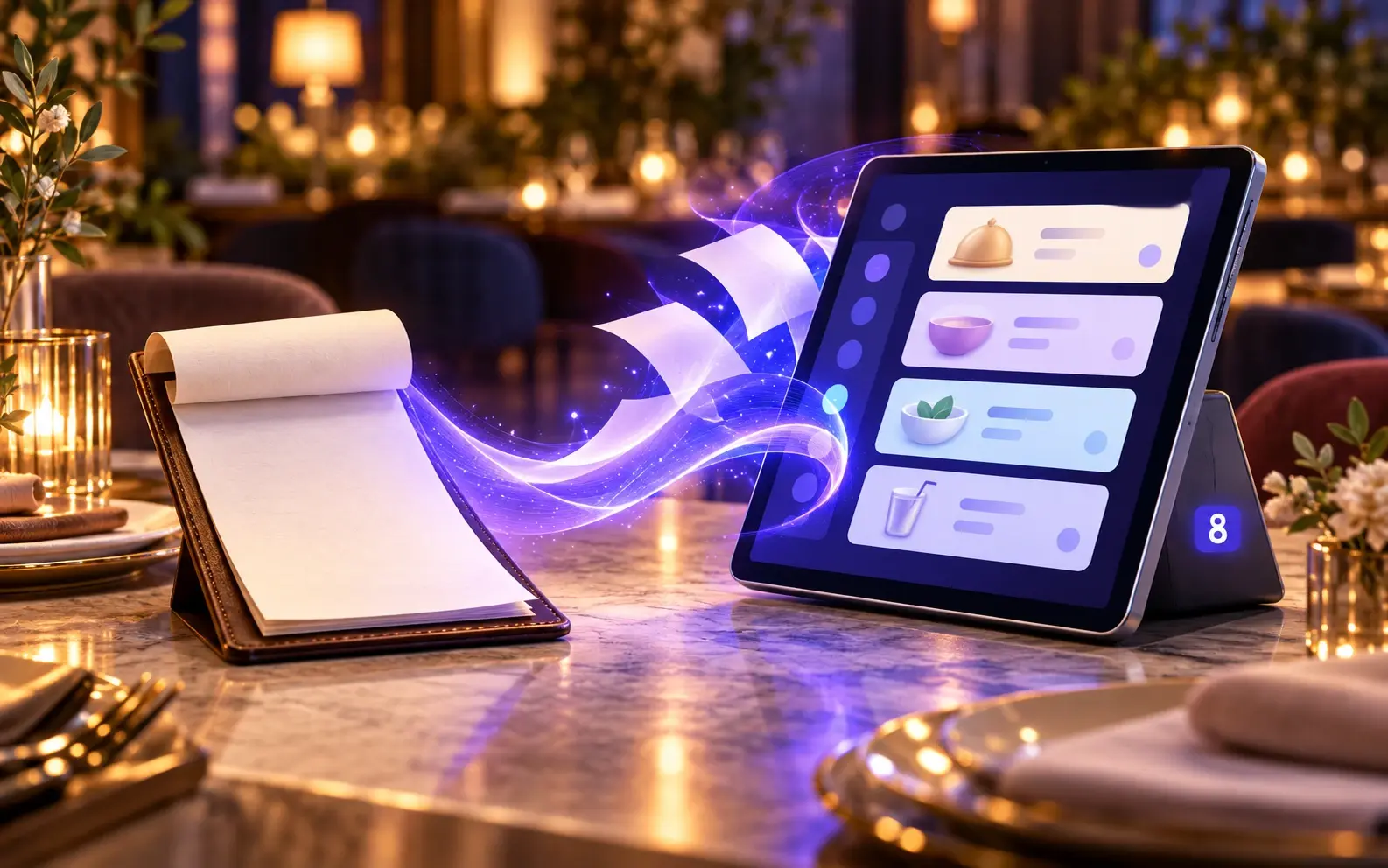
The word and its meaning
Adisyon entered Turkish from the French word “addition” (sum, bill). In a restaurant it is used in two senses: the bill the waiter brings to the table, and the software that manages that bill. “Could I have the adisyon?” and “adisyon program” are two faces of the same word.
From an operations standpoint, the adisyon is the table's life cycle: it is opened, grows with orders, goes to the kitchen, is closed with payment, and is written into the report.
The invisible cost of the paper adisyon
Not the price of the pad; what gets lost in the process:
How does a digital adisyon work?
The waiter opens the table and enters the order from a phone or tablet; the order lands on the kitchen display and at the till at the same moment. If the guest prefers, they order themselves from the QR menu on the table, and the order is again added to the same adisyon. When the bill is closed, payment is recorded as cash, card or split; the fiscal receipt is issued from a fiscal cash-register POS device (such as Pavo or PlusPay).
At the end of the day, the opened and closed adisyons become a report broken down by product and payment type; stock has already been deducted the moment the order was placed.
The adisyon is the table's life cycle: it is opened, grows, goes to the kitchen, is closed with payment, is written into the report.
A one-day switching plan
In the morning the menu and floor plan are entered, at noon waiters are given logins, and the evening service is taken from the screen. The paper pad is kept as a backup on the first day; from the second day on, all adisyons are digital. The existing receipt printer works with most systems; new hardware is not required.